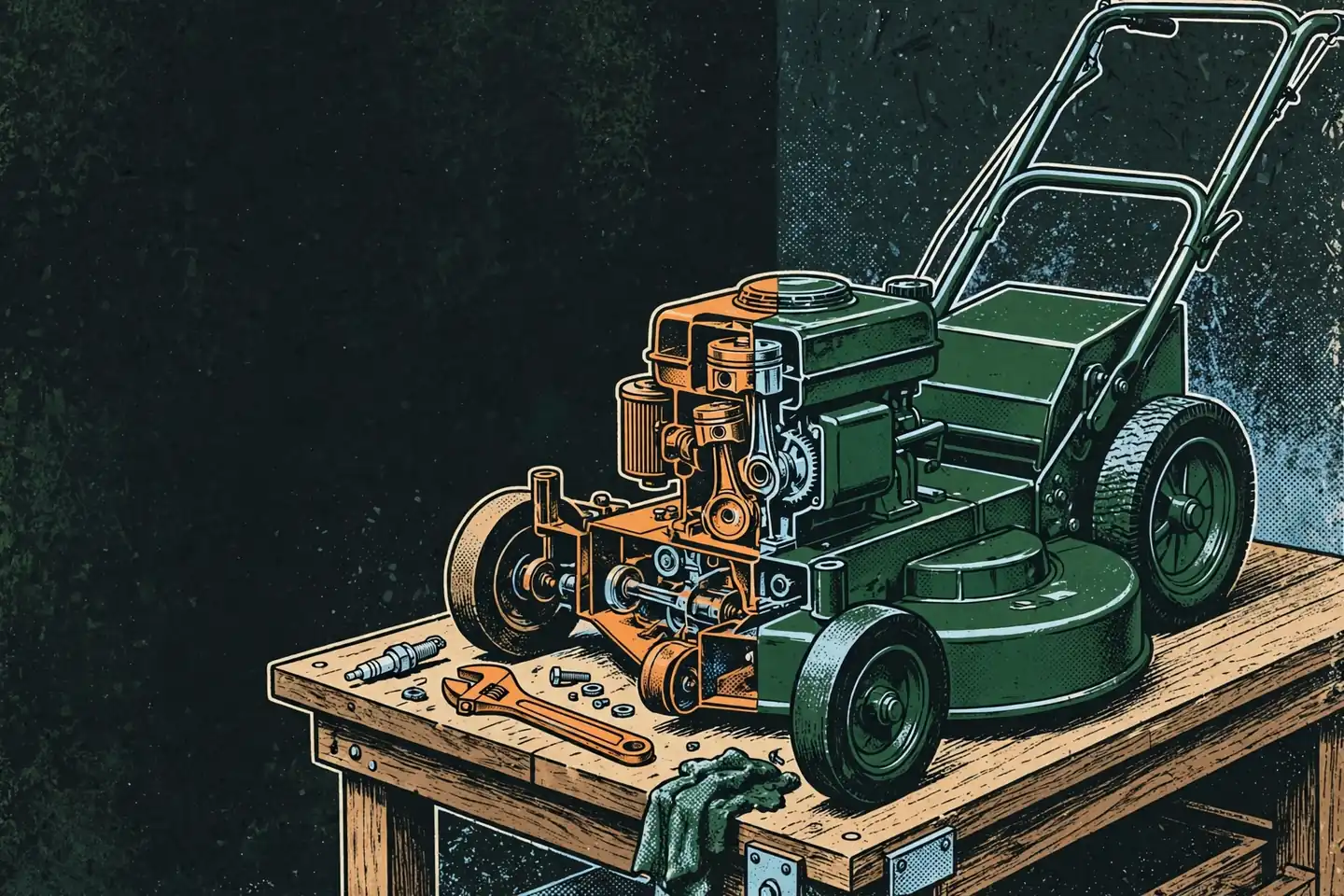
How the 50% rule for lawn mower repair works
The most common rule of thumb is simple. If a repair costs more than about half the price of a comparable new mower, or more than your mower is worth today, replacing it is usually the better deal. Below that line, repairing tends to win, especially for cheap, routine fixes.
Our calculator starts from that idea and then adjusts it. A mower in good condition gets a higher repair ceiling. A mower that's older or in poor shape gets a lower one. Complex repairs, such as transmissions and engine internals, are treated more cautiously because the final bill often grows once the work starts.
When to break the rule
- Repair above 50% when the mower is a well-built or commercial-grade machine, the deck and frame are solid, it recently had other major work, or a comparable replacement would be a noticeable step down in quality.
- Replace below 50% when this is the second or third problem in a season, the deck is rusting through, the engine smokes or burns oil, or parts for your model are hard to find.
- Count your time. A $40 DIY repair that eats a whole Saturday might not be worth it to you, and that's a fair reason to pay a shop or replace.
Typical lawn mower repair costs
These are approximate national ranges to help you sanity-check a quote. Real prices vary by region, shop rate, mower size, and whether you use OEM or aftermarket parts. Riding mowers and zero-turns generally fall at the high end.
| Repair | DIY parts (approx.) | Shop total (approx.) |
|---|---|---|
| Blade sharpening | $0–15 | $15–40 |
| Blade replacement | $15–50 | $40–100 |
| Tune-up (oil, plug, air filter) | $20–45 | $60–150 |
| Carburetor cleaning or rebuild | $10–30 | $75–175 |
| Carburetor replacement | $20–80 | $100–250 |
| Drive or deck belt | $20–60 | $80–200 |
| Starter or recoil pull-cord assembly | $20–80 | $75–250 |
| Ignition coil | $20–60 | $80–200 |
| Transmission / hydrostatic drive (riders) | $300–1,000+ | $500–2,000+ |
| Engine replacement | $250–1,500+ | $500–2,500+ |
These ranges are rough planning figures, not quotes. Ask your shop for a written estimate that includes diagnosis, parts, labor, and tax.
Push mower vs. riding mower vs. zero-turn: repair or replace?
Push mowers
Replacement is cheap, so the bar for repairs is low. Routine fixes like blades, carb cleaning, and plugs are worth it. A major engine repair on an older push mower usually isn't.
Riding mowers & tractors
A new one costs a lot more, so a few-hundred-dollar repair is often sensible. The tipping point is usually a failed transmission or engine on a mower that's already worn elsewhere.
Zero-turns
Replacement costs the most, and many are built to be rebuilt. Hydrostatic drive and engine repairs can still be worth it on a solid frame, so get a diagnosis before deciding.
With battery mowers, the big question is usually the battery pack. Check whether a replacement pack costs close to the price of a new mower kit that includes one. With robotic mowers, check whether the maker still supports your model with parts and software updates.
How long do lawn mowers last?
Lifespans vary a lot with build quality, yard size, and care, but these are typical ranges:
- Gas push mowers: often around 8–10 years.
- Battery push mowers: the mower body often lasts longer than its first battery pack.
- Riding mowers and lawn tractors: often around 10–15 years.
- Zero-turns: residential models are similar to riders, and commercial-grade ones can last longer with good maintenance.
Yearly oil changes, a sharp blade, a clean air filter, and fresh or stabilized fuel over winter do more for lifespan than almost anything else.
Signs it's time to replace your mower
- The repair quote is more than the mower is worth, or more than about half the cost of a comparable new one.
- Blue or white smoke, knocking, or heavy oil use, which point to internal engine wear.
- A deck that's rusted through or cracked, or a bent frame.
- A transmission that slips or won't climb hills, on an older rider.
- Repeated breakdowns in the same season.
- Parts for your model are discontinued or hard to get.
- Your yard has changed, and a different size or type of mower would simply suit it better.
Brand notes: John Deere, Toro, Honda, Husqvarna, and more
The brand on the hood matters less than two practical questions: can you still get parts, and who made the engine?
- Engines are often made by a different company. Many mowers sold under brands like Craftsman, Troy-Bilt, Cub Cadet, Husqvarna, and Toro use engines from makers such as Briggs & Stratton, Kohler, Kawasaki, or Honda, and some brands also build their own. The engine model number, usually stamped on the engine itself, is what you need for engine parts.
- Find both model numbers. The mower's model and serial number is on a sticker or plate, often under the seat or on the deck. Write it down before you shop for parts or call a shop.
- Dealer-supported brands usually have good parts availability and service manuals through local dealers. That can make bigger repairs on brands like John Deere, Toro, Exmark, or Husqvarna easier to justify.
- Battery brands such as EGO, Greenworks, Ryobi, and Kobalt tie you to their battery systems. Check whether a pack you already own fits a new mower before replacing it.
- Common wear parts like blades, belts, filters, and plugs are widely available for most popular brands, so routine repairs are rarely blocked by brand.
Lawn mower repair or replace: frequently asked questions
Is it worth fixing my lawn mower?
Usually, yes, if the repair costs well under half the price of a comparable new mower and the rest of the machine is in fair or good shape. Blades, belts, cables, carburetor cleaning, and ignition parts are almost always worth fixing. Big engine or transmission repairs on an older mower are where replacement starts to make more sense.
What is the 50% rule for mower repairs?
It is a rule of thumb: if a repair would cost more than about half the price of a comparable new mower, or more than the old mower is worth, replacing it is often the better deal. Treat it as a starting point, not a law. A well-built mower in good condition can justify more, and a worn-out one can justify less.
How much does a typical lawn mower repair cost?
Simple jobs like blade sharpening or a tune-up often cost under about $100 at a shop. Carburetor work, belts, and starters commonly land in the low hundreds. Transmission and engine work on riding mowers and zero-turns can reach several hundred to well over a thousand dollars. Prices vary a lot by region and shop.
Should I repair or replace a riding mower?
Riding mowers and zero-turns cost much more to replace, so they usually justify bigger repairs than push mowers. Replacement deserves a hard look when the transmission or engine fails on an older machine that also has a rusted deck, worn steering, or other problems.
How long do lawn mowers last?
As a rough guide, many gas push mowers last around 8 to 10 years, riding mowers around 10 to 15 years, and commercial-grade zero-turns longer with good care. Battery mowers often outlast their first battery pack. Maintenance and storage matter more than age alone.
Can I fix my lawn mower myself?
Many common jobs are DIY-friendly: blades, air filters, spark plugs, oil changes, belts, and carburetor cleaning. Always disconnect the spark plug wire or remove the battery first. Leave internal engine work, hydrostatic transmissions, and anything you can't diagnose confidently to a shop.
Why won't my mower start after sitting all winter?
Old fuel is the most common cause. Fuel left in the tank can gum up the carburetor. Try fresh fuel, a new spark plug, and a clean air filter first. If that doesn't work, a carburetor cleaning is often the fix, which is usually inexpensive.
Does this calculator give an exact price?
No. It is a planning aid that compares your repair estimate with the cost of a comparable new mower and adjusts for age, condition, repair complexity, and your DIY comfort. Use real quotes and your model number for the best result.
Ask a question or tell us what you think
Have a question about your mower, a comment on the calculator, or an idea to make it better? Send it our way.